King of Swords Tarot Card Meaning
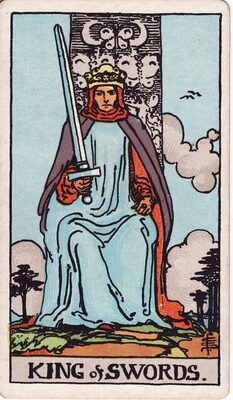
A king sits firmly on his stone throne, a double-edged sword held upright in his right hand, his expression stern but fair, robes billowing in the wind — the King of Swords represents the highest authority of the intellect. He is the judge, the strategist, the leader who makes decisions not from emotion but from reason, evidence, and an unwavering commitment to truth. Where the Queen of Swords gained her clarity through personal experience, the King wields his as a matter of principle. He is the mind at its most disciplined, its most powerful, and its most accountable. He is the highest court card of the Suit of Swords.
| Field | Value |
|---|---|
| Card Number | King of Swords |
| Arcana | Minor Arcana |
| Suit | Swords |
| Element | Air |
| Keywords (Upright) | authority, intellectual power, truth, fair judgment, clear thinking |
| Keywords (Reversed) | manipulation, cruelty, abuse of power, dishonesty |
| Yes or No | Yes |
King of Swords Upright Meaning
When the King of Swords appears upright, the situation calls for authority, clear thinking, and the courage to make decisions based on truth rather than convenience. This is not a card of emotional reasoning or gut feelings — the King of Swords demands evidence, logic, and intellectual rigor. He appears when you need to cut through confusion, set aside personal bias, and arrive at a judgment that is fair, informed, and defensible.
The King of Swords represents mastery over the intellectual realm. He has the Page’s curiosity fully matured, the Knight’s decisiveness channeled with restraint, and the Queen’s perception elevated to systematic judgment. His authority comes not from force but from the consistent quality of his thinking and the integrity of his standards. People trust the King of Swords not because he is warm but because he is reliable — his word means something, his analysis is sound, and his decisions hold up under scrutiny.
This card also represents ethical leadership and the responsibility that comes with intellectual power. The King’s sword is double-edged, reminding him that the same mental sharpness that allows him to see clearly can also be used to harm. He chooses to use his intellect in service of justice and truth, not personal gain. When this card appears, it may be asking you to take on a leadership role, mediate a dispute, or make a difficult decision that requires setting emotion aside in favor of what is fair and right.
The King of Swords can also represent a specific person — a father figure, boss, mentor, lawyer, doctor, or authority figure who embodies these qualities. Someone who speaks with measured precision, expects high standards, and holds themselves and others accountable.
King of Swords Reversed Meaning
When the King of Swords appears reversed, intellectual power has become corrupted. The authority that once served truth now serves the self. The reversed King of Swords represents manipulation, cruelty disguised as logic, and the abuse of power by someone who uses their intelligence to control, deceive, or dominate rather than to serve justice.
This reversal describes someone who is intellectually brilliant but morally bankrupt. They know exactly what they are doing — using their understanding of people and systems to manipulate outcomes in their favor while maintaining a veneer of rationality. The reversed King of Swords is the corrupt judge, the gaslighting partner, the boss who uses “constructive criticism” as a weapon, or the authority figure who punishes those who question them.
The reversal can also indicate a failure of intellectual integrity on your own part. Making decisions you know are unfair, twisting facts to support a predetermined conclusion, or using your intelligence to justify behavior you know is wrong. The reversed King of Swords asks: are you using your mind to find the truth, or to construct a convincing lie?
King of Swords in Love & Relationships
In love, the King of Swords upright represents a relationship grounded in mutual respect, intellectual depth, and honest communication. The King in a romantic context is not the most openly affectionate partner, but he is one of the most reliable. He shows love through consistency, commitment, and the willingness to have difficult conversations when they are needed. If you are in a relationship, this card suggests that approaching a current issue with logic and fairness will serve you better than approaching it with emotion. For singles, the King of Swords may indicate that a mature, intellectually powerful partner is entering your life — someone who values substance over superficiality.
When the King of Swords appears reversed in love, the dynamic becomes controlling or emotionally harmful. A partner who uses their intelligence to manipulate, who wins every argument through sheer intellectual force rather than genuine engagement, or who withholds emotional warmth as a form of power. The reversed King in love can describe emotional abuse that is rationalized as “being logical” — a partner who dismisses your feelings as irrational while maintaining absolute control over the relationship’s terms. If you recognize this pattern, the card urges you to see the manipulation for what it is, regardless of how logically it is packaged.
King of Swords in Career & Finances
In career readings, the King of Swords upright is a top-tier card for professional authority and leadership. It signals success through intellectual excellence — career advancement based on the quality of your thinking, your ability to communicate complex ideas clearly, and your reputation for fair and sound judgment. This card favors law, medicine, academia, management consulting, executive leadership, journalism, and any field where analytical precision and strategic thinking drive success. Financially, the King of Swords advises treating your finances with the same rigor you would apply to a professional analysis — data-driven, dispassionate, and focused on long-term outcomes rather than short-term emotions.
Reversed in career matters, the King of Swords warns against abusive authority or corrupt leadership. A boss who manipulates through intimidation, a corporate culture that rewards dishonesty, or your own temptation to use your professional position for personal gain at others’ expense. Financially, the reversal can point to financial decisions tainted by dishonesty — creative accounting, undisclosed conflicts of interest, or rationalizing unethical financial behavior because you are smart enough to get away with it.
King of Swords in Health & Wellbeing
The King of Swords in health readings emphasizes the importance of seeking authoritative medical guidance. Upright, this card suggests consulting specialists, getting definitive diagnoses, and making health decisions based on the best available evidence rather than hearsay or hope. The King’s approach to health is systematic: gather the data, consult the experts, weigh the options, and make a clear-headed decision. Mental health-wise, this card supports cognitive approaches — therapy modalities that use logic and structured thinking to address emotional challenges.
Reversed, the card may warn against dismissing emotional wellbeing as unimportant, or against a healthcare authority figure whose judgment should be questioned rather than blindly accepted.
Tarot is not a substitute for professional medical advice. If you have health concerns, consult a qualified healthcare provider.
King of Swords — Yes or No?
The King of Swords is a Yes. This card carries the energy of authority, clear judgment, and truth — all of which support a positive and definitive outcome. When the King of Swords appears in a yes or no question, it confirms that the path forward is sound and that the decision you are considering is well-founded. Apply clear thinking and honest assessment, and the outcome will favor you. When you have weighed the evidence and need a final verdict, a yes or no tarot reading delivers the King’s kind of judgment — clear, definitive, and grounded in the truth of the moment.
King of Swords Card Combinations
King of Swords + Justice The ultimate combination for truth and fair judgment. When both cards appear, a legal matter, formal dispute, or ethical question will be resolved with integrity. The outcome will be just, fair, and based on the merits of the case rather than politics or emotion.
King of Swords + The Emperor Maximum authority and structure. This combination represents powerful leadership — someone (possibly you) who is directing a situation with both intellectual clarity and institutional power. Together, these cards suggest building or leading organizations, establishing systems, or making decisions that affect many people.
King of Swords + The Devil A dangerous combination that warns about the corruption of power. The King’s intellect is being used to serve The Devil’s temptations — control, manipulation, or the rationalization of harmful behavior. This pairing asks you to examine whether authority is being used responsibly or abusively.
King of Swords + Queen of Swords Intellectual partnership at its finest. When both Sword royals appear together, the situation demands and receives the highest levels of honest communication, strategic thinking, and mutual respect. This combination is powerful for any partnership — romantic, professional, or creative — built on a shared commitment to truth and excellence.
King of Swords + The Tower Authority challenged by upheaval. The King’s carefully constructed order is threatened by The Tower’s sudden disruption. This combination can indicate a leader who is toppled, a system that collapses, or a situation where the truth comes out in a way that undermines an established authority. Alternatively, it can represent using clear thinking to navigate a crisis.
King of Swords + Ace of Swords The master and the spark. The King’s mature authority meets the Ace’s raw truth, creating a combination of established wisdom and fresh insight. A new idea or revelation arrives that an experienced mind is perfectly positioned to act upon. Exceptional for starting ventures that require both innovation and strategic discipline.
King of Swords + Five of Swords The King’s authority is being tested by conflict. This combination asks whether power is being used to resolve the conflict fairly or to crush the opposition. The King upright would seek justice; reversed, he would seek domination. Consider which version is showing up in your situation.
Frequently Asked Questions
What does the King of Swords mean in a tarot reading?
The King of Swords represents intellectual authority, clear thinking, truth, and fair judgment. When this card appears, the situation requires you to think logically, communicate with precision, and make decisions based on evidence rather than emotion. It can also represent an authority figure in your life who embodies these qualities — a leader, mentor, or advisor whose judgment you trust.
Does the King of Swords represent a specific person?
The King of Swords frequently represents a person — often a man (or anyone embodying masculine energy) in a position of authority. This could be a father, boss, lawyer, doctor, judge, or mentor. The person is typically intellectually formidable, ethically grounded (upright) or ethically corrupt (reversed), and makes decisions with cool rationality. The King may also represent an aspect of yourself that you need to embody.
Is the King of Swords a positive card?
Upright, the King of Swords is a very positive card for situations requiring clear thinking, honest leadership, and fair judgment. He represents the best of intellectual authority — power used responsibly and in service of truth. Reversed, however, the card warns of the serious dangers of intellectual power without ethical grounding: manipulation, cruelty, and abuse of authority.
What is the difference between the King and Queen of Swords?
Both represent intellectual mastery, but they express it differently. The Queen’s wisdom is personal — earned through lived experience, loss, and self-development. She is perceptive and independent. The King’s authority is institutional — he exercises judgment on behalf of principles, systems, and broader responsibility. She represents inner clarity; he represents external authority. Both value truth, but they arrive at it through different paths and apply it in different contexts.