Five of Swords Tarot Card Meaning
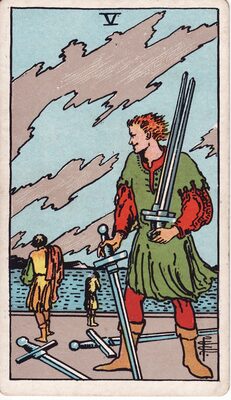
A figure smirks while holding three swords, two more scattered on the ground, as defeated opponents walk away under a turbulent sky — the Five of Swords is the aftermath of a battle where nobody truly won. This card represents conflict, hostility, and the hollow taste of victory achieved at too high a cost. It is card five of the Suit of Swords. It asks a question that lingers long after the argument ends: was winning worth what it cost you?
| Field | Value |
|---|---|
| Card Number | Five of Swords |
| Arcana | Minor Arcana |
| Suit | Swords |
| Element | Air |
| Keywords (Upright) | conflict, defeat, winning at all costs, betrayal, hostility |
| Keywords (Reversed) | reconciliation, compromise, moving past conflict, forgiveness |
| Yes or No | No |
Five of Swords Upright Meaning
When the Five of Swords appears upright, you are in the midst of — or just coming out of — a conflict that has left a bitter residue. Someone won, someone lost, but the victory feels empty. This is the card of Pyrrhic victories, power plays, and arguments that leave relationships damaged in their wake. The Five of Swords does not care who was right. It cares about what was lost in the fight.
You may be the figure holding the swords — the person who won the argument, got the last word, outmaneuvered a rival. But look at the faces walking away. They are not simply defeated; they are wounded. Was the point you proved worth the trust you destroyed? Was being right more important than being kind? The Five of Swords confronts you with the real cost of intellectual combat: relationships shattered, bridges burned, reputations tarnished.
Alternatively, you may be one of the retreating figures. You were outmatched, outargued, or outplayed by someone who cared more about winning than fairness. The Five of Swords can signal betrayal — a colleague who threw you under the bus, a friend who used your vulnerabilities against you, or a situation where the deck was stacked from the start. In these cases, the card’s advice is sobering: sometimes the wisest move is to walk away.
Not every battle is worth fighting. The Five of Swords asks you to evaluate whether the conflict you are engaged in will actually improve anything, or whether it is ego driving you forward. If the only reward for winning is the satisfaction of being right, it may not be worth the damage.
Five of Swords Reversed Meaning
When the Five of Swords appears reversed, the hostilities are winding down. After the bitterness of the upright card, the reversal offers a path toward reconciliation, compromise, and moving past conflict. You or someone involved is ready to put the swords down and start repairing the damage.
This reversal often signals that the futility of continued fighting has become obvious. Both sides are exhausted, and the original issue seems smaller now than the destruction the conflict has caused. The reversed Five of Swords represents the moment when pride softens enough to allow an apology, a negotiation, or simply the agreement to stop fighting.
However, the reversed Five can also indicate lingering resentment. The fighting may have stopped, but the feelings have not. An unspoken grudge, a sense of injustice that was never addressed, or the memory of words that cannot be taken back — these haunt the reversed Five of Swords. True resolution requires more than a ceasefire. It requires honest conversation about what happened and a willingness from both sides to let go.
Five of Swords in Love & Relationships
In love, the Five of Swords upright is one of the most challenging cards to receive. It describes a relationship where conflict has become the dominant dynamic — arguments that escalate beyond the original issue, power struggles where each partner needs to be right, or a pattern of emotional manipulation that leaves both people drained. If you are in a relationship, this card asks you to examine whether you are fighting with your partner or fighting against them. There is a critical difference. For singles, this card may indicate that a potential connection is rooted in competition or incompatibility rather than genuine affection.
When the Five of Swords appears reversed in a love reading, it suggests that a period of conflict is ending. One or both partners are ready to lay down their weapons and focus on healing the relationship. Compromises that seemed impossible during the heat of the argument may now feel achievable. The reversed card can also mean that you are finally walking away from a toxic dynamic — not out of defeat, but out of the wisdom that some battles cost more than they are worth. Sometimes leaving is the strongest thing you can do.
Five of Swords in Career & Finances
In career readings, the Five of Swords upright points to workplace politics, power struggles, and conflicts that damage professional relationships. You may be dealing with a competitive colleague who plays dirty, a boss who takes credit for your work, or an office culture where backstabbing is normalized. This card warns against engaging in the same tactics, even when provoked — winning through manipulation or dishonesty will cost you more than it gains. Financially, the Five of Swords can signal losses from disputes, legal battles, or business partnerships that turn adversarial.
Reversed in career matters, the Five of Swords indicates that a workplace conflict is resolving. Negotiations that were stuck are moving forward, a difficult colleague is becoming more cooperative, or you are choosing to stop engaging in toxic office politics. The reversal advises taking the high road — letting go of the desire for professional revenge or vindication in favor of forward momentum. Financially, the reversed card suggests that disputes over money are being settled, though the resolution may require compromise rather than total victory.
Five of Swords in Health & Wellbeing
The Five of Swords in health readings often points to the physical toll of ongoing conflict and stress. Arguments, workplace hostility, and relational tension create chronic stress that wears down the body — elevated cortisol, tension headaches, digestive issues, and sleep disruption. Upright, this card suggests that the stress of a conflict is affecting your health more than you realize.
Reversed, the easing of tensions brings relief to both mind and body. As the conflict resolves, expect your physical symptoms to improve as well. This card reversed encourages you to actively release the tension you have been holding — through exercise, massage, breathing exercises, or whatever helps your body let go of what your mind has been carrying.
Tarot is not a substitute for professional medical advice. If you have health concerns, consult a qualified healthcare provider.
Five of Swords — Yes or No?
The Five of Swords is a No. This card carries the energy of conflict, defeat, and hollow victories, none of which support a positive outcome. If you are asking about a situation that involves competition, negotiation, or interpersonal dynamics, the Five of Swords warns that pushing forward is likely to result in damage — even if you technically win. Consider whether the fight is worth it before proceeding. If the conflict has left you questioning what was really at stake, a three-card tarot reading can reveal the full cost of the battle — what started it, where you stand now, and whether resolution or retreat serves you better.
Five of Swords Card Combinations
Five of Swords + The Tower Conflict explodes into full-scale destruction. This combination signals that a power struggle or betrayal is about to blow everything apart. The aftermath will be painful, but it may also be clarifying — the false structures sustained by the fighting will collapse, leaving only what is real.
Five of Swords + Justice Consequences arrive. When the Five of Swords meets Justice, the unfair behavior, betrayal, or dishonesty at the center of the conflict is about to be addressed. This pairing suggests legal outcomes, formal accountability, or the natural karmic return of what was put out during the fight.
Five of Swords + Three of Swords The intersection of conflict and heartbreak. This combination suggests that the fight is not just about power or winning — it has cut someone deeply, causing real emotional pain. The damage goes beyond bruised egos; hearts are broken and relationships may not survive.
Five of Swords + Six of Swords Leaving the battlefield behind. The Six of Swords following the Five indicates a decision to walk away from the conflict and move toward calmer waters. This is not surrender — it is the strategic choice to stop fighting a battle that cannot be won without unacceptable cost.
Five of Swords + The Empress A conflict is affecting your nurturing relationships or creative projects. The Empress asks you to consider whether the fight is worth the damage it is doing to the softer, more fertile areas of your life. Sometimes protecting your peace is more important than proving your point.
Five of Swords + Ten of Wands The burden of ongoing conflict is becoming unbearable. You are carrying the weight of arguments, grudges, and unresolved tensions, and it is crushing you. This combination warns that something must give — either the conflict resolves or you collapse under its weight.
Five of Swords + Temperance A call for balance after battle. Temperance’s healing and moderation can soothe the Five’s hostility, suggesting that compromise, patience, and a willingness to see the other side are the path forward. This combination favors mediation over confrontation.
Frequently Asked Questions
What does the Five of Swords mean in a tarot reading?
The Five of Swords represents conflict, hostility, and the aftermath of a battle — whether you won or lost. When this card appears, it points to a situation where fighting has caused more damage than the original disagreement warranted. It asks you to consider whether the conflict is productive or destructive, and whether winning is really worth the cost.
Is the Five of Swords always negative?
The Five of Swords is one of the more challenging cards in the deck, but it is not without value. It serves as an important warning about the cost of conflict and can prompt necessary self-reflection about how you handle disagreements. Sometimes the best thing the Five of Swords does is convince you to walk away from a fight that is not worth your energy.
What does the Five of Swords mean reversed in love?
Reversed in love, the Five of Swords signals the end of a conflicted period. One or both partners are ready to stop fighting and start healing. It can also indicate walking away from a toxic relationship — not as defeat, but as a conscious choice to prioritize your wellbeing over a destructive dynamic.
How do I handle a Five of Swords situation?
Ask yourself honestly whether the conflict is about something that matters or about ego. If the issue is real and important, seek resolution through honest dialogue, not escalation. If the fight is primarily about being right, consider whether the relationship or situation is worth more than the argument. Sometimes the strongest response is to stop engaging entirely.